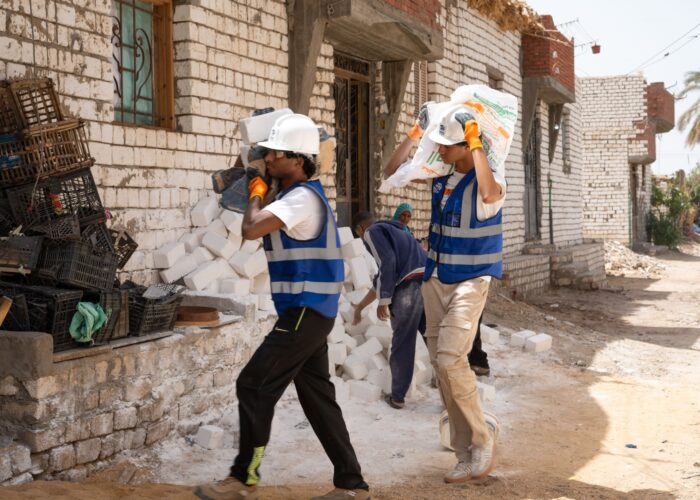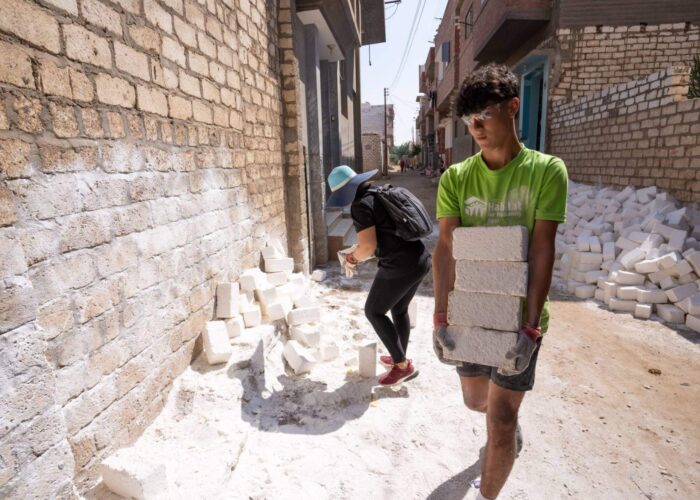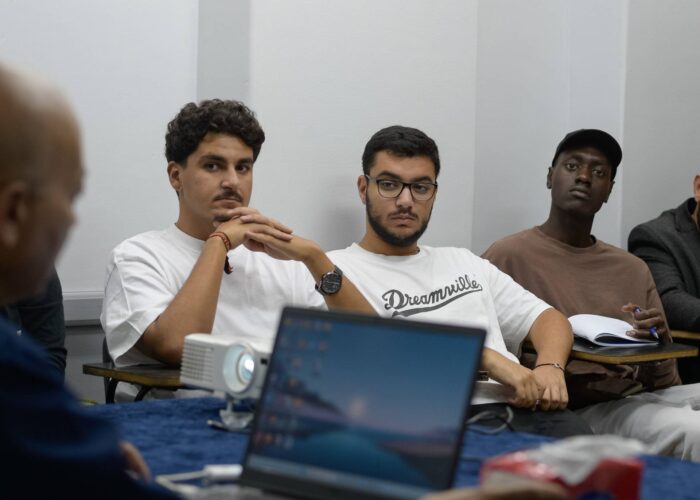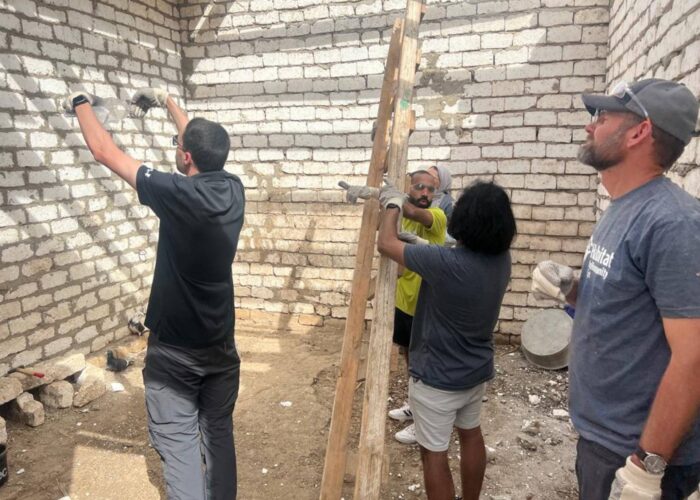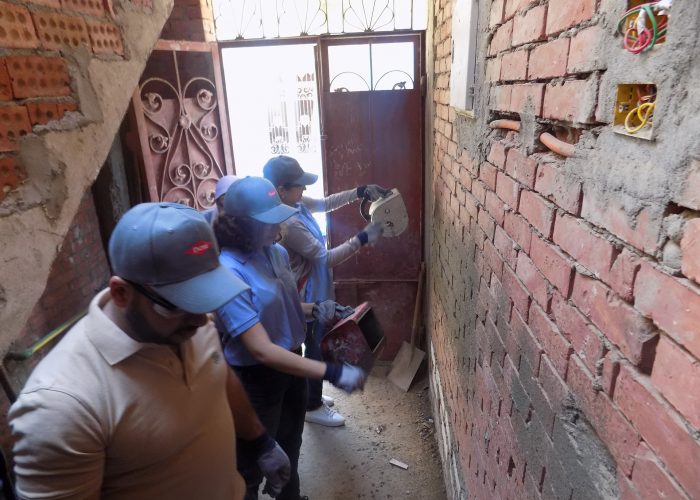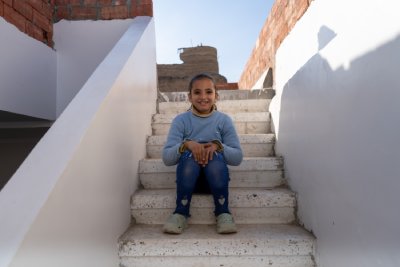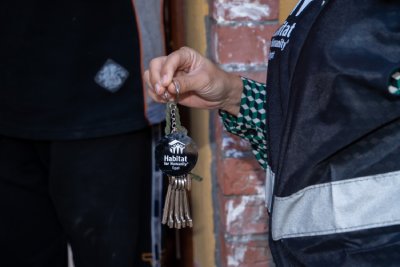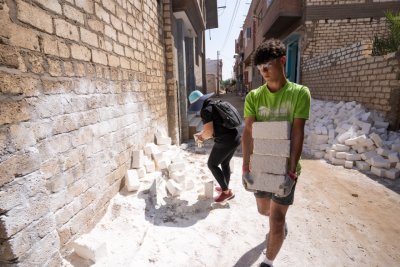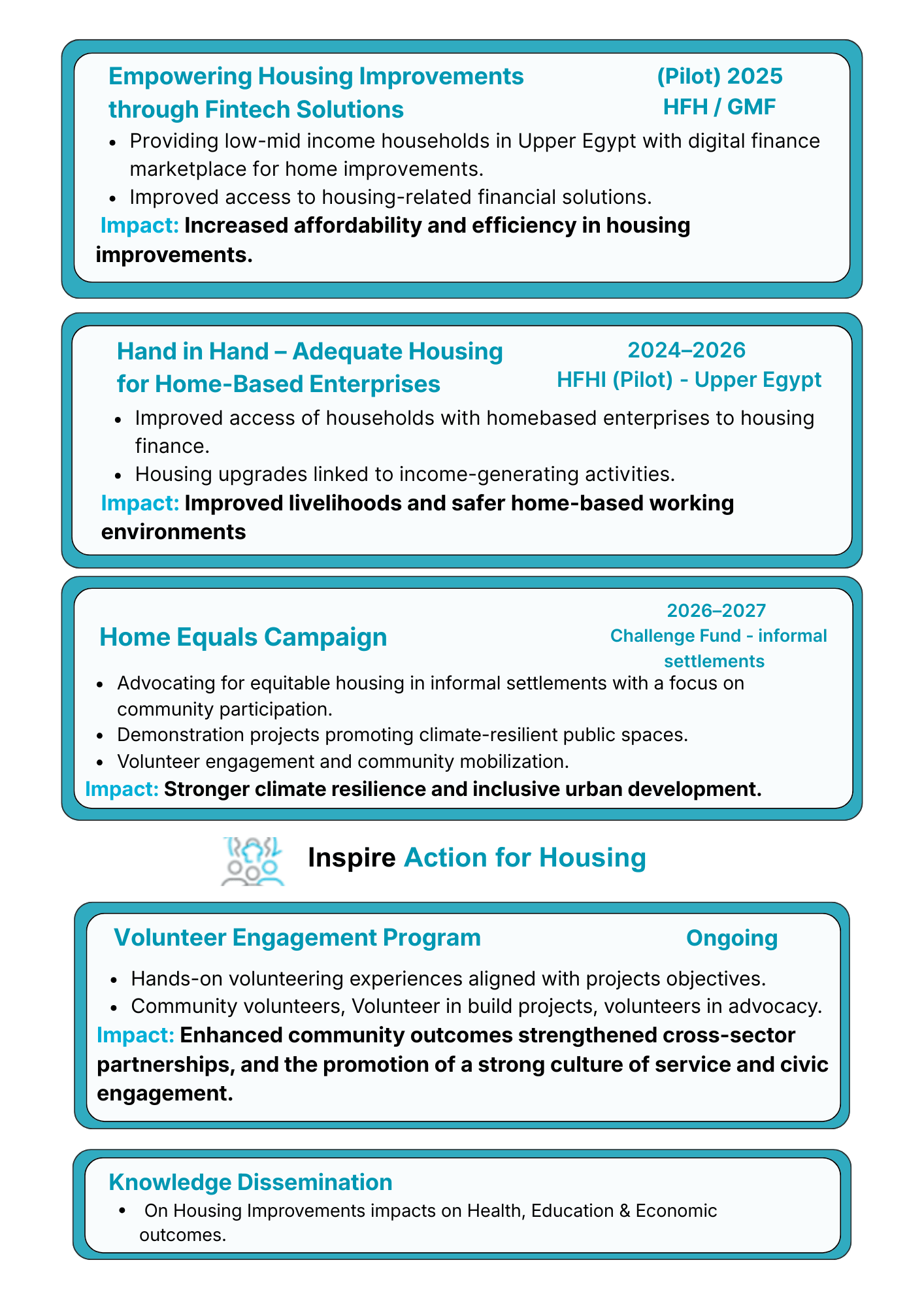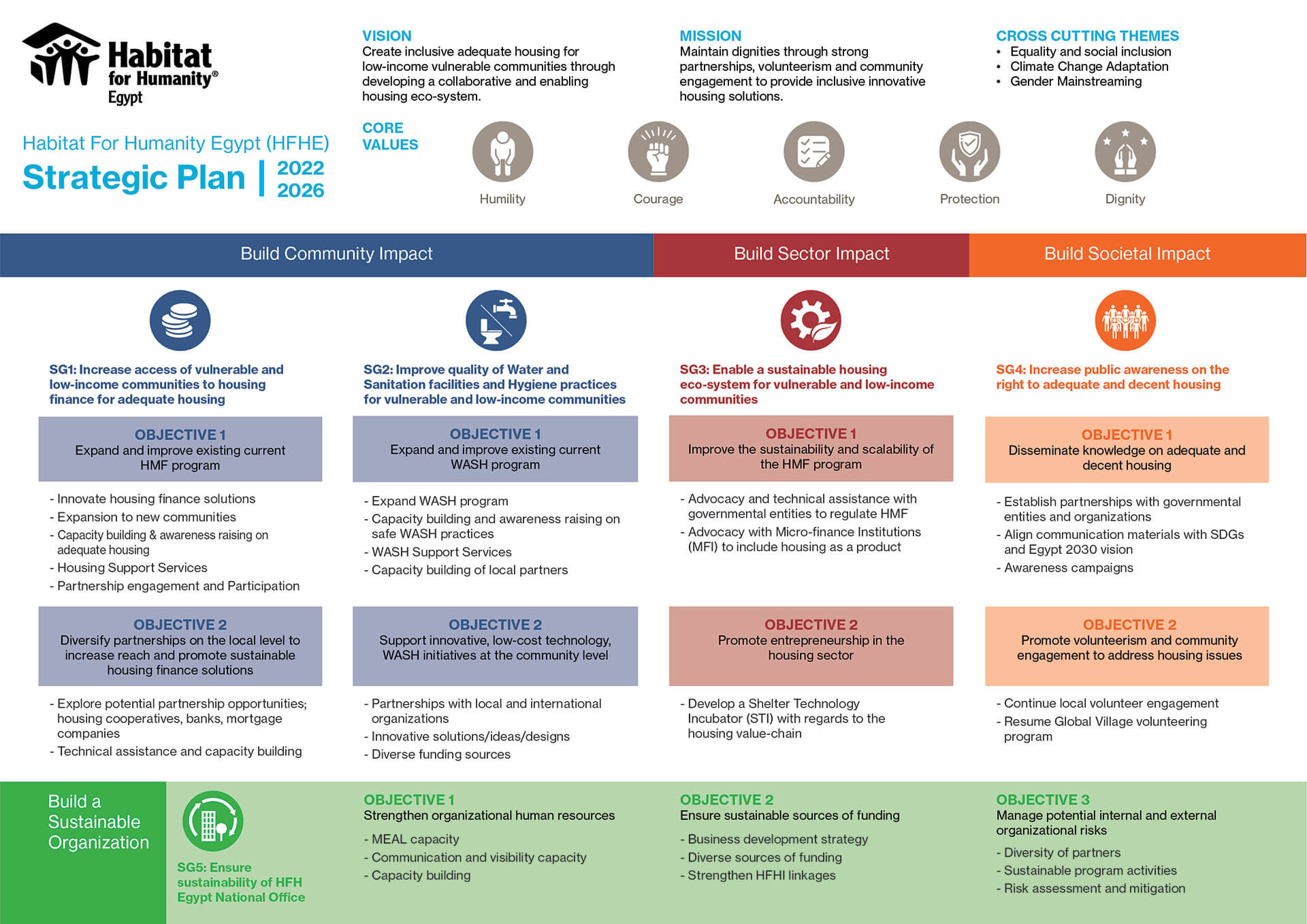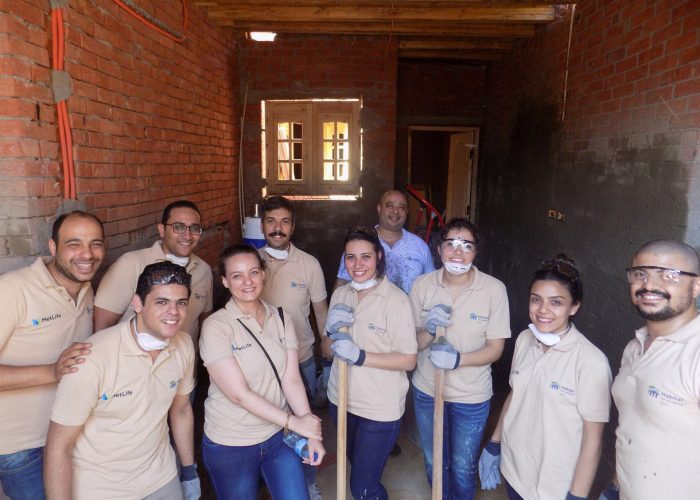
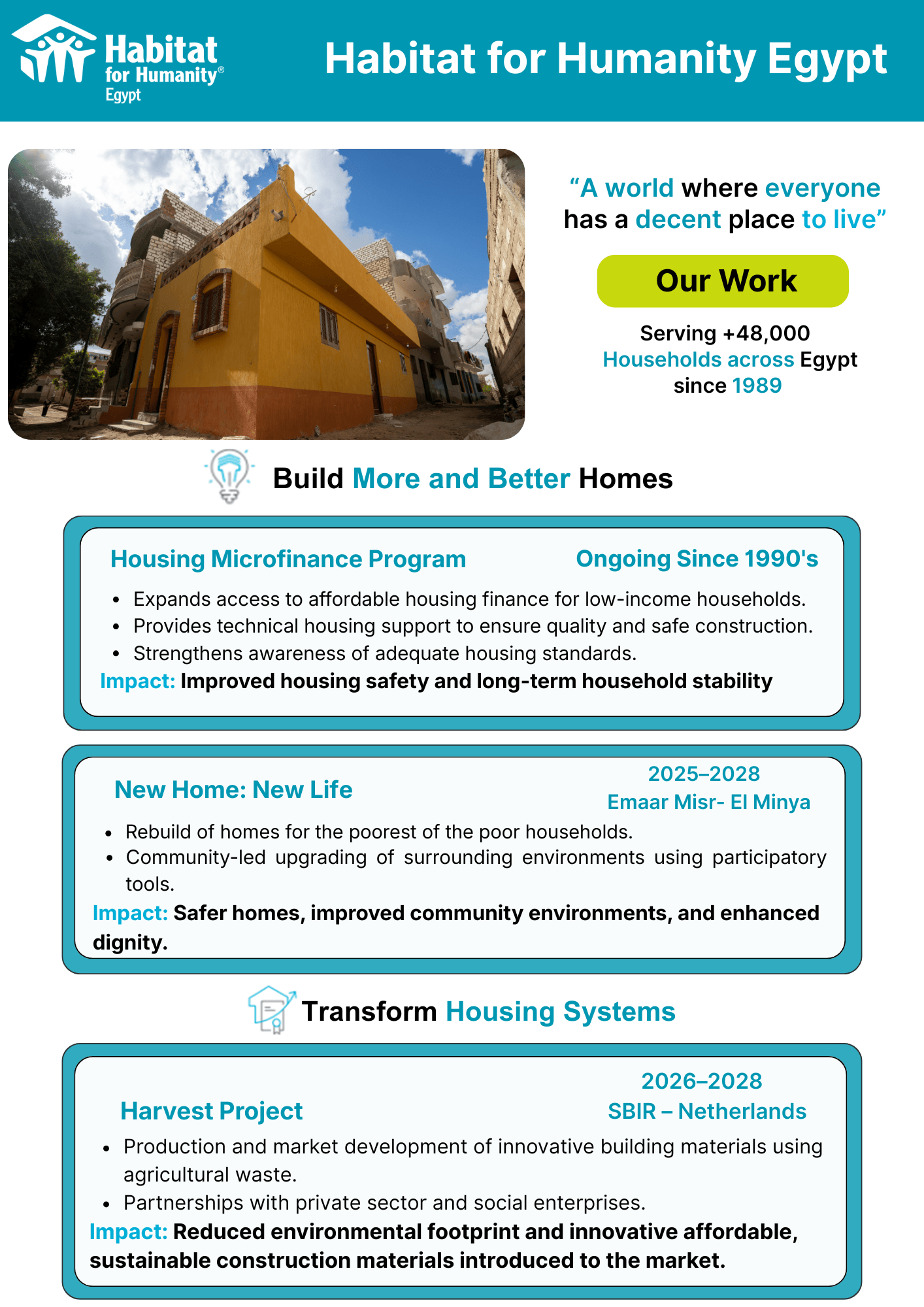
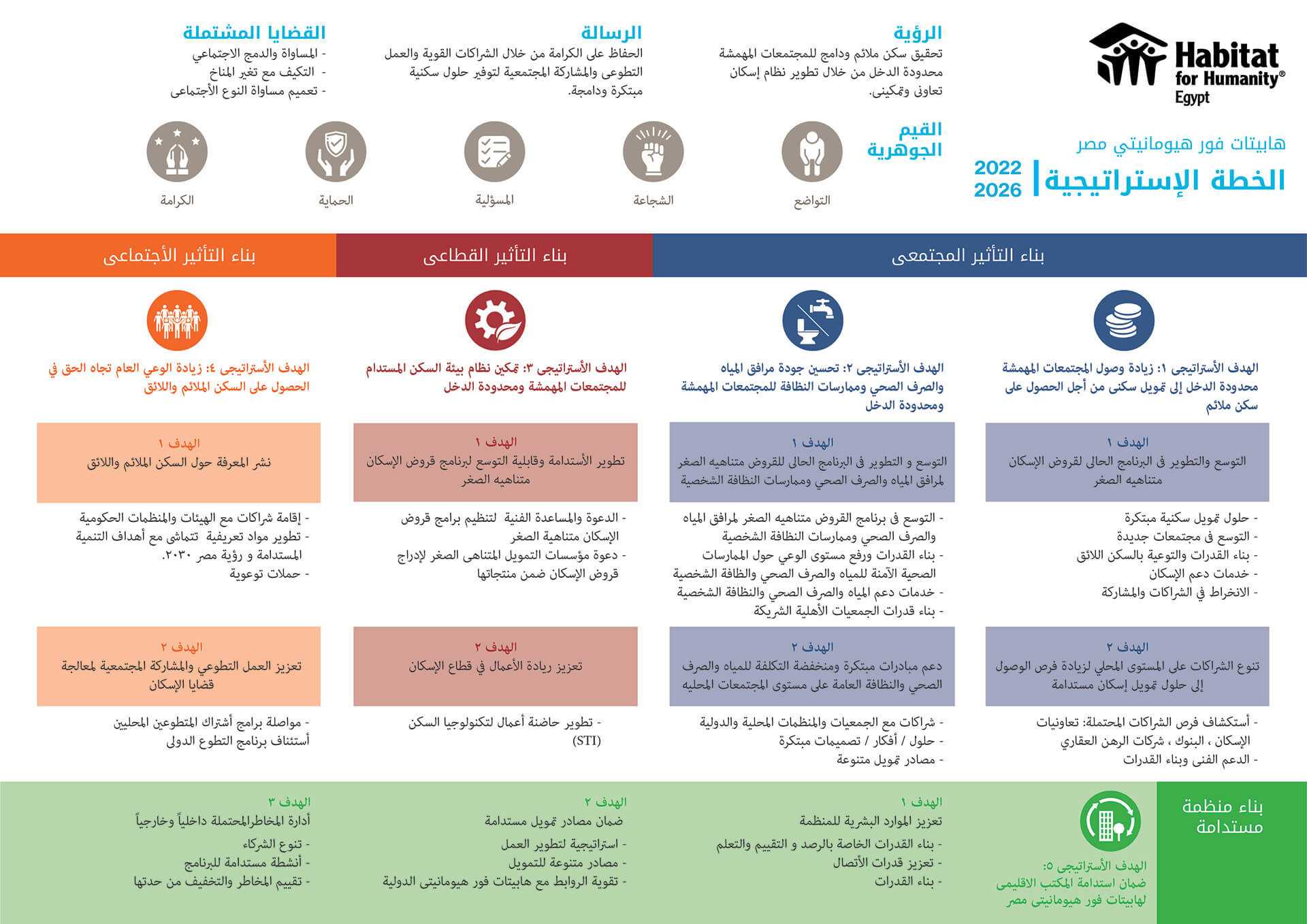
Habitat for Humanity Egypt (HFHE) has been serving over 48,000 households across Egypt since 1989 and currently operates in more than 40 communities across five governorates, in partnership with strategic local organizations and community members. Its programs include housing microfinance to support home improvements, construction of homes for the most vulnerable families, development of housing market systems including digital housing finance and fostering innovation and entrepreneurship within the housing sector.
Habitat partners with local NGOs to provide small loans that help low-income families who cannot access formal financing channels improve their homes, water and sanitation, and public hygiene. The organization also offers technical and engineering support and builds the capacity of partners, beneficiaries, and technical staff to promote adequate housing. In collaboration with government and private sector partners, Habitat expands financial solutions that enable vulnerable communities, particularly in informal settlements, to improve their housing environment and adapt to climate change.
Habitat for Humanity and our partners around the world are launching #HomeEquals, a global advocacy campaign seeking policy changes to increase access to adequate housing in informal settlements. Learn more about this campaign and how you can join our efforts.
“Visit habitat.org/home-equals to sign our pledge in support of the 1 billion people living in informal settlements.”
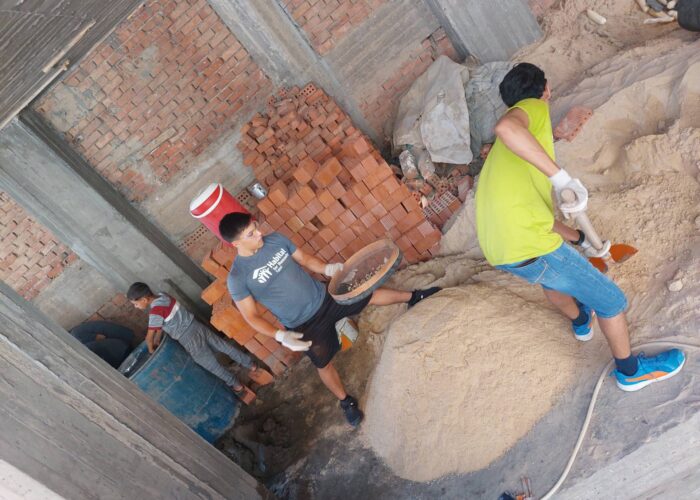
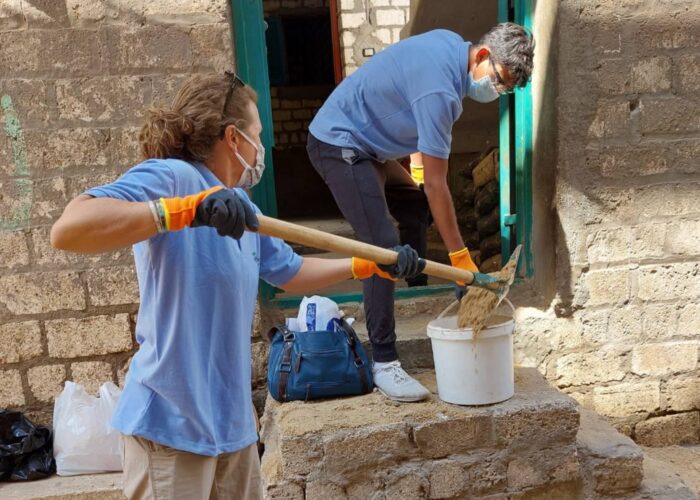
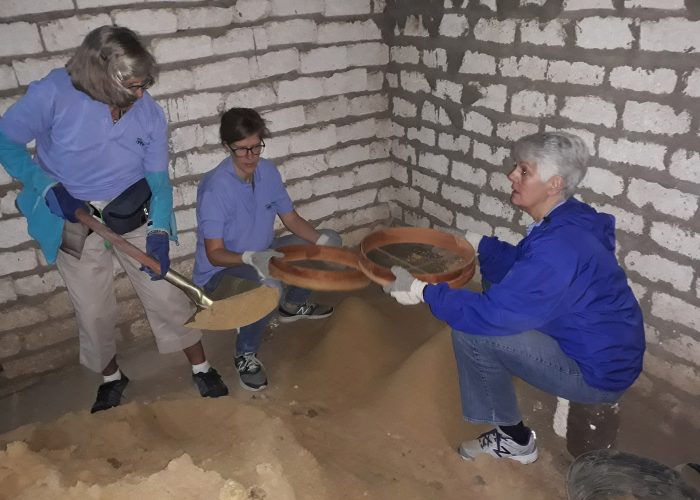
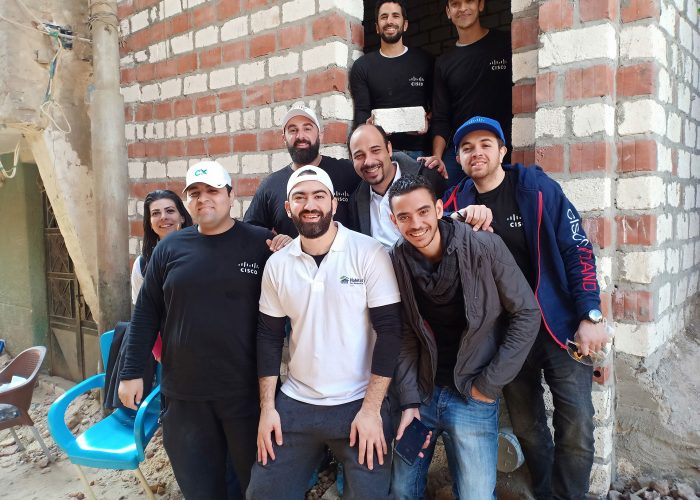
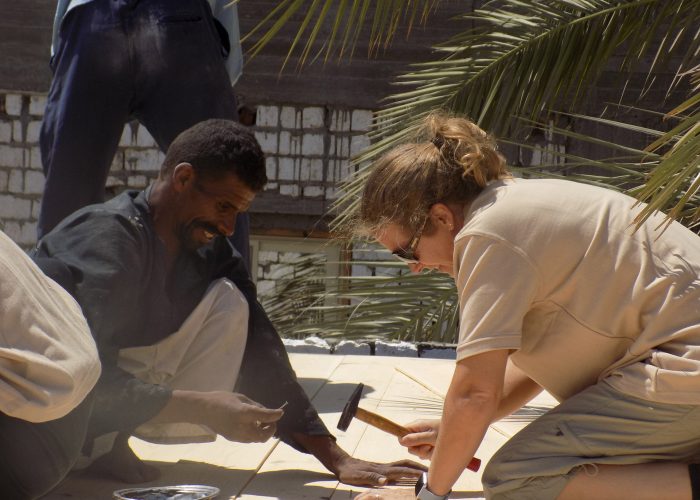
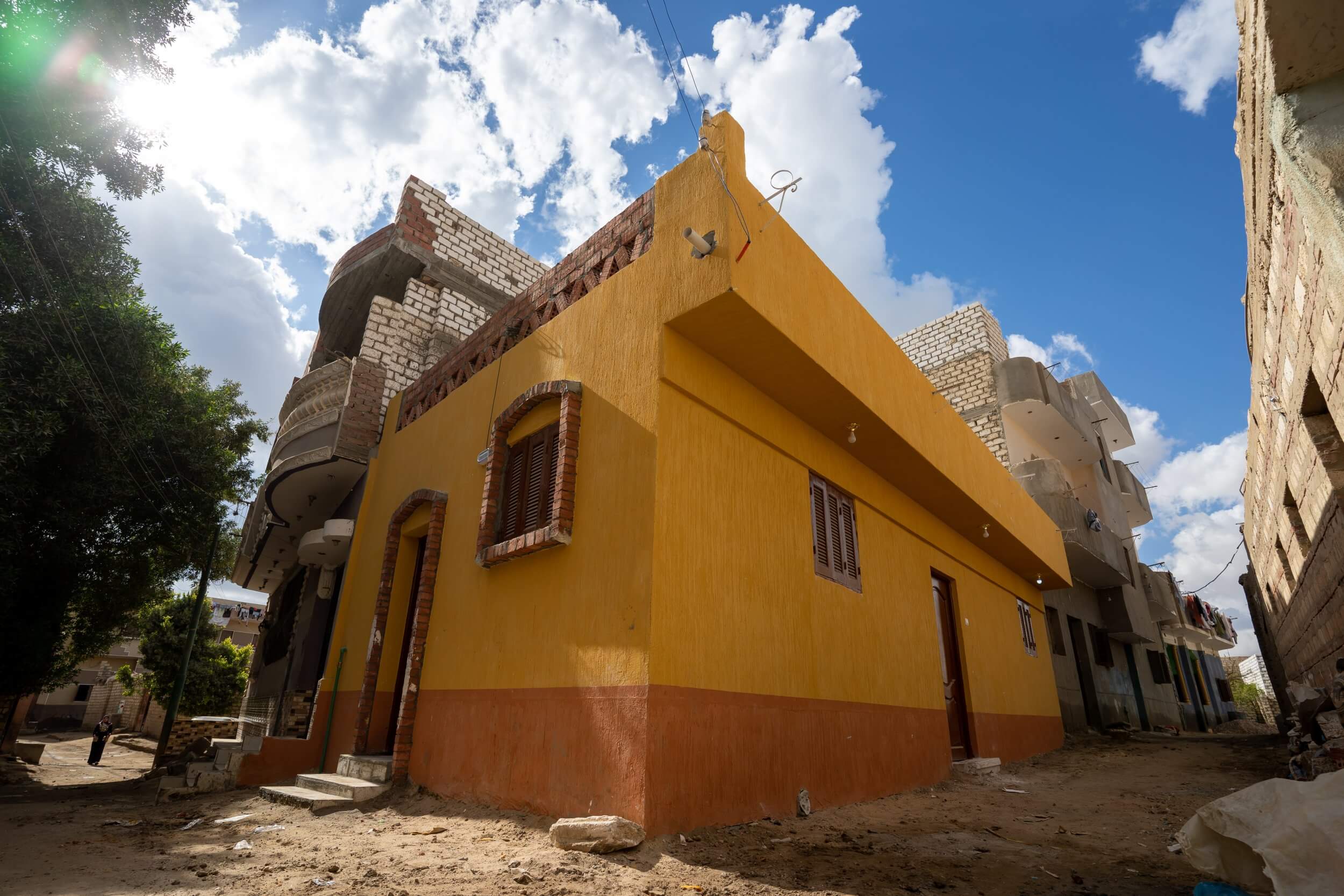
Houses built by Habitat Egypt are decent, durable and affordable. They are built using appropriate, locally-available building materials, which meet specific housing requirements. Houses have cement or tile floors, plaster or limestone brick walls, inside plumbing and sanitary systems, secure wooden roofs, and enough rooms to separate parents from children, boys from girls, and families from their livestock. These changes create secure homes, protecting the families from the elements and also allow families the opportunity to build a second floor in the future.
Based on the belief that every Egyptian has the right to a healthy house, Hope to reach a significant housing need. Willing to serve families did not have the minimum monthly income needed to repay the loans. To solve this problem, the Poorest of the Poor Initiative was developed in 2006.
The goal of this initiative is to make new homes available to those without means of repayment, and to increase awareness, involvement, and collaboration. It requires community organizations to raise funds beyond those provided by Habitat Egypt.
Habitat Egypt has agreed with their local partners to allocate 7 percent of annual housing through non-refundable grants to those families and individuals living in the country’s poorest places. The success of this program has motivated some donors to allocate a fair part of their donations to serving this disadvantaged group.
2083 homes have been built for the poorest of the poor.
“Habitat for Humanity requires that all employees take seriously their ethical responsibilities to safeguarding our intended beneficiaries, their communities, and all those with whom we work. Managers at all levels have particular responsibilities to support and develop systems that create and maintain an environment that prevents harassment, sexual exploitation and abuse; safeguards the rights of beneficiaries and community members (especially children); and promotes the implementation of Habitat for Humanity’s code of conduct.”